
I have approximately four million things saved on the internet. Interiors, outfits, recipes, gardens, hotels I would like to visit. Along with a suspicious number of kitchens belonging to people whose tax bracket is none of my business. There is no shortage of inspiration around here is what I’m trying to say.
And lately, I’ve started to wonder if that might be part of the problem.
There was a time when inspiration was something we had to go looking for. We bought the magazine and tore out the pages. We wandered through a store on the chance we would discover the perfect find. We noticed the woman sitting three tables over and thought, I would never have put those together, but I love that. We collected ideas slowly enough that there was actually time to do something with them.
Now? We can consume hundreds of other people’s choices before we’ve finished our breakfast. We see their kitchens and outfits, their skincare routines and vacations, the vintage piece they found for the corner that was missing something, and the exact shade of white they finally chose after painting 14 samples on the wall. None of this is inherently bad. I love seeing how other people live and what they create. I have built a career, in many ways, around paying attention to beautiful things.
But when I really stop to think about it, I think we’re consuming other people’s taste faster than we’re developing our own. And that’s the part I can’t stop thinking about.
We have access to more inspiration than any generation that came before us, but I’m really not convinced that fact is making us more discerning. If anything, it has become incredibly easy to misinterpret seeing something repeatedly as actually liking it.
The algorithm is very good at this. You pause on one beautiful kitchen and suddenly your entire feed has decided you are a woman who needs soapstone countertops, a commercial-size sub-zero fridge with glass doors, and a collection of antique cutting boards immediately. Save a particular pair of jeans? Within days the pair you’ve been perfectly happily reaching for are beginning to look suspiciously frumpy.
See something enough times and it starts to feel familiar. Familiar starts to feel desirable. And eventually? We aren’t entirely sure whether we chose the thing or simply absorbed it.
I don’t think that means trends are bad or that influence is something we should try to avoid. That would be both impossible and, to be honest, kind of boring. Taste has always been shaped by exposure. We learn by seeing what other people create, by studying people who do something exceptionally well, by traveling, reading, looking at art, walking through beautiful spaces, and noticing approaches, styles, and combinations we never would have thought of ourselves.
The problem isn’t influence. The problem is never leaving enough room between influences to hear your own opinion.
When we’re constantly taking in what everyone else likes, it gets harder to tell what we actually like ourselves.
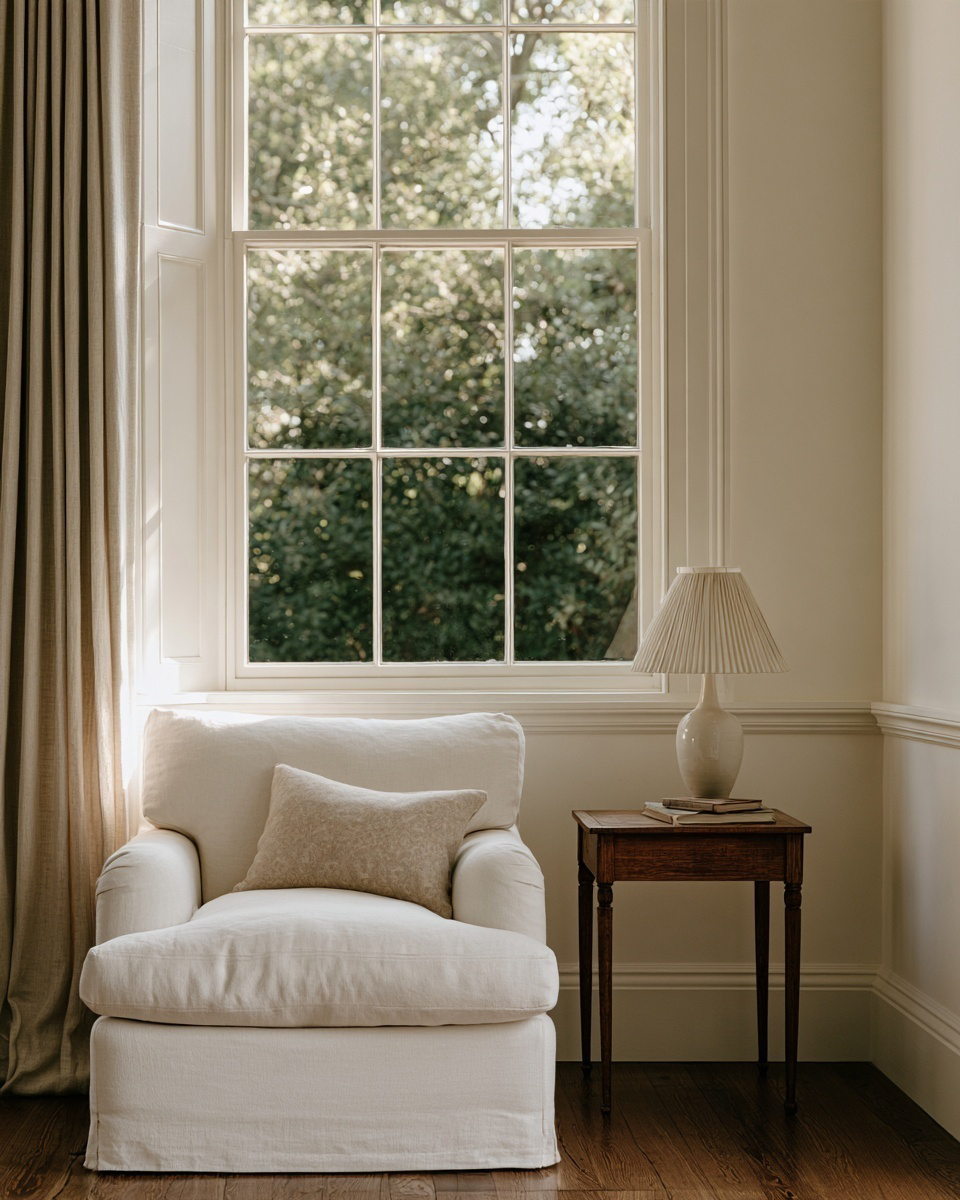
Taste Is Not an Aesthetic
I truly think we’ve confused good taste with having the right aesthetic.
Right now, certain colors, clothes, furniture, and finishes have been collectively declared tasteful. Give it a few years and we’ll replace half of them with something else and pretend we never liked them in the first place.
That’s not taste. That’s a trend cycle. Good taste is discernment. It’s knowing why something works, what you actually like about it, and whether it makes sense for you.
You can buy every piece in a beautifully designed room and still not know why the room works. You can copy someone’s wardrobe and still not have her style. You can buy the chair. You can’t buy the eye that knew it was the right chair.
And that eye? That gets developed over time.
You see a lot. You pay attention. You try things. You make some questionable purchases. You live with the sofa you were absolutely certain would change your life, and eventually admit that you have hated it for years. Eventually, you stop simply knowing that you like something and start understanding why you like it.
That distinction matters because I like that sends you looking for the link. I know why I like that teaches you something about your own taste.
Collect Reasons, Not Links
This is something I’ve been trying to practice more intentionally.
When I see something that immediately pulls me in, I try not to begin with “Where is that from”? Instead, I want to know what I’m actually reacting to. Maybe it’s the unexpected color combination. Maybe it’s the quality, maybe it’s the restraint, or maybe it’s the tension by pairing something old with something new. Sometimes I realize it isn’t the room I’ve been responding to at all. It’s the warmth of the wood, the lack of upper cabinets or the fact that, for once, my eye has somewhere to rest.
That is much more useful information than a product link. Because now I’ve learned something about myself.
And when you start doing this often enough, patterns emerge. The rooms you’ve saved may look completely different, but perhaps they all have warm wood, something old and very little clutter. Maybe the outfits are completely different too, but you keep noticing the same shapes or combinations. The specifics don’t have to match. You’re looking for what they have in common.
The point isn’t to reverse-engineer these things so you can recreate them. It’s to understand what keeps attracting you to them. Because those patterns become preferences. And over time, those preferences become a point of view.
And that is where I think good taste actually begins.
Make Up Your Own Mind
Developing your own taste takes time. It takes paying attention, trusting what keeps pulling you back, and probably listening a little less to what the algorithm thinks you should like. That’s really what The Weekly Edit is about, too. A Sunday note on living well, choosing thoughtfully, and developing your own opinions along the way.
I have plenty more where this one came from.
Leave a Reply


WEEKLY EDIT
COMMENTS +
Share: