
Somewhere along the way, wellness became ridiculously exhausting. Anyone else feeling this too?
There is apparently an ideal time to wake up, walk outside, drink water, eat protein, take supplements, exercise, drink more water, regulate your nervous system, support your lymphatic system, expose your eyeballs to morning sunlight, avoid exposing those same eyeballs to blue light after sunset, and establish an evening routine with enough steps to qualify as a part-time job.
And this is supposed to all be in the name of reducing stress. *Insert eye roll here*
Listen, I love wellness. I love learning about biohacking. I love discovering small things that help me sleep better, feel stronger, have more energy, manage my stress, or generally just operate as normal of a human being as I can in modern life which doesn’t make it all that easy on the body. I mean, we’re fighting the effects of chemtrails, highly processed foods, synthetic chemicals, artificial light, screens, sedentary lifestyles and chronic stress just to name a few and then wondering why nobody feels particularly fantastic.
I’ve bought the supplements. I’ve tried the routines. I’ve listened to the podcasts. I’ve saved the posts. I’ve gone down enough wellness rabbit holes to know how quickly “I wonder if this would help me sleep better” turns into a three-hour investigation of mitochondrial health and $600 worth of things sitting in an online cart. It’s rough out there.
Which is why over the past few years, I’ve become far more selective about what gets to become part of my life. Not because I’ve stopped caring about my health. It’s quite the opposite.
I’ve come to realize that caring for myself and constantly trying to optimize myself are not necessarily the same thing.
Because the truth? Wellness has become incredibly hypocritical. We’ve managed to make feeling well feel like another thing we’re failing at. Which is eactly why I don’t chase every wellness trend.
When Wellness Becomes Another Form of Consumption
There was a time when “taking care of yourself” sounded relatively straightforward. Eat decent food. Move your body. Get some sleep. Drink water. Get outside. Spend time with people you love. Try not to live in a constant state of panic. But now? We track almost everything.
Our sleep has a score. Our glucose has a graph. Our heart rate has zones. Our recovery has a number. Our steps are counted. Our food has macros. Our stress can apparently be monitored by a ring on our finger that will kindly inform us that we’re stressed… as if the eye twitching hadn’t already tipped me off?!
There are protocols for our mornings and protocols for our evenings. Powders for our water. Things to do before eating. Things to do after eating. Things to do while eating so that the thing we’re eating has the proper effect and not the wrong effect.
And every few weeks, the internet discovers another non-negotiable. I’m exhausted just writing this.
I don’t think most of these things are inherently bad. That’s actually what makes this conversation more interesting. Many of them are probably helpful. But helpful and necessary? Are not the same thing.
And that’s a distinction I’ve started making much more often. Because every good thing we add to our lives still requires something from us whether that’s time, money, attention, mental bandwidth, or the pressure of consistency.
At some point, wellness can become another version of the same problem so many of us are trying to solve everywhere else: too much of everything.
I don’t want my pursuit of health to become another source of anxiety. After all, isn’t that exactly what we’re trying to avoid anyway? I want my pursuit of health to help me live well. And these days, that means I have a much higher bar for what earns a place in my routine.
Here’s a look into what that internal dialogue has become.
Q1: Does This Solve a Problem I Actually Have?
This might be the biggest shift I’ve made. I used to hear about something beneficial and immediately wonder if I should adopt it. Now? I ask myself, “do I actually need that?”
Those are very different questions. Because if you spend enough time consuming wellness content, you can become aware of approximately 847 problems you didn’t know you had before you even got to lunchtime.
Fifteen minutes scrolling the subject of wellness on the internet and you’ll discover that your cortisol may be misbehaving, your hormones apparently need support, and your gut probably needs healing. Then there’s your blood sugar that needs balancing, your nervous system that needs regulating and your lymph? Something I spent approximately 35 years never thinking about or even knowing what it was – is suddenly a major concern.
It is very easy to go from feeling perfectly fine to wondering how you’ve managed to remain alive this long. So I’ve stopped looking for problems to solve.
If something is genuinely affecting the way I feel or function? I’ll explore it. I’ll learn, I’ll ask questions, I’ll look into it and then I’ll make changes if needed. But I don’t need to manufacture a deficiency in my life simply because someone else found a solution for theirs.
Not every improvement available to me is an improvement I need. Wait. Stop and read that sentence one more time to yourself.
Because that very sentence has become useful far beyond wellness.
Q2: Can I Actually Live This Way?
There are plenty of things I could theoretically do for my health. The question is whether I want to construct my entire day around doing them.
Because just like you, I have a life. I have a family, work, responsibilities, people I want to spend time with, meals I want to enjoy without mentally calculating the order in which I should consume everything on the plate.
If a wellness practice genuinely makes me feel better and fits naturally into my life, great. If it requires twelve steps, three specialty products, two timers, an app subscription, and refusing to eat dinner with my family because it’s outside my optimal feeding window? We’ve lost the plot, friends.
I don’t want to become exceptionally good at maintaining a wellness routine and terrible at enjoying my actual life. Sustainability matters. Could I reasonably still be doing this six months from now? Could I do it during a busy week? Does missing one day make absolutely no difference, or does it send me into a spiral of feeling like I failed?
The practices that have stuck for me personally tend to be ridiculously ordinary.
Walking.
Getting outside.
Eating food that makes me feel good.
Prioritizing protein.
Drinking enough water.
Moving my body.
Going to bed at a decent time.
Finding ways to manage stress.
Taking care of myself in ways that don’t require me to think about taking care of myself every waking minute, you know?
And they’re not revolutionary. They’re not sexy. No one is going viral tomorrow for announcing that sleep is good for you…
But maybe that’s part of the point?
Q3: Does This Add to My Life or Make Me More Preoccupied With Myself?
This is the question I don’t think we ask enough. Because there is a version of wellness that makes you feel more alive. And then there seems to be a version that makes you spend an extraordinary amount of your life monitoring yourself.
How did I sleep? What did I eat? How many steps did I get in? How’s my energy? What’s my recovery score? Did that meal spike something? Am I bloated? Is this inflammation? Why am I tired? Should I take something? Should I stop eating something? Should I buy something?
There comes a point where paying attention to your body can quietly become being preoccupied with your body. I’m not convinced that’s wellness. And this is coming from a woman with medical PTSD who has an incredible gift for turning the smallest, most harmless symptom into a medical catastrophe so rare they’ll eventually name it after me.
I want to know my body well enough to care for it. I don’t want to spend my entire life observing it. The whole reason I care about my health is because there are things outside of myself that I want to experience. I want energy for my family. I want strength as I get older. I want to work, and create, and travel, and cook dinner, and walk through beautiful places, and stay up too late talking to people I love every once in a while without wondering what it’s going to do to my sleep score and how I’m going to feel in the morning.
I want my health to support my life. I don’t want maintaining my health to become my life.
Q4: Do I Feel Better Because of This? Or Do I Feel Better About Myself Because I’m Doing It?
This one can be tough to digest. Because I’ve come to realize that wellness is not immune to status.
There is an identity attached to being someone who wakes early, works out, takes the supplements, drinks the green thing, owns the expensive machine, knows her biomarkers, and has that whole evening routine that could qualify as an Olympic event.
It can feel good to be a person who does all the right things which isn’t necessarily a problem. Trust me, I understand the value in having optimal health and the habits it requires. But sometimes I wonder if the ritual becomes more important than the result.
I’ve started asking myself whether something actually makes me feel better or whether doing it simply makes me feel like I’m being “good.” You know, the kind of woman who has her life together.
And sometimes? The answer is both. That’s fine. But I want to know the difference. Because wellness can become another place where we look for our worth. Another way to divide our days into things we did right and things we did wrong.
I ate well today.
I didn’t work out.
I got my steps.
I had dessert.
I slept eight hours.
I forgot my supplements.
Good.
Bad.
Good.
Bad.
Before we know it we find ourselves with something that was intended to help us feel better simply becoming an elaborate grading system for how well we’re taking care of ourselves. I’m too old for that kind of drama in my life.
Let’s Get Real: The Basics Aren’t Very Marketable
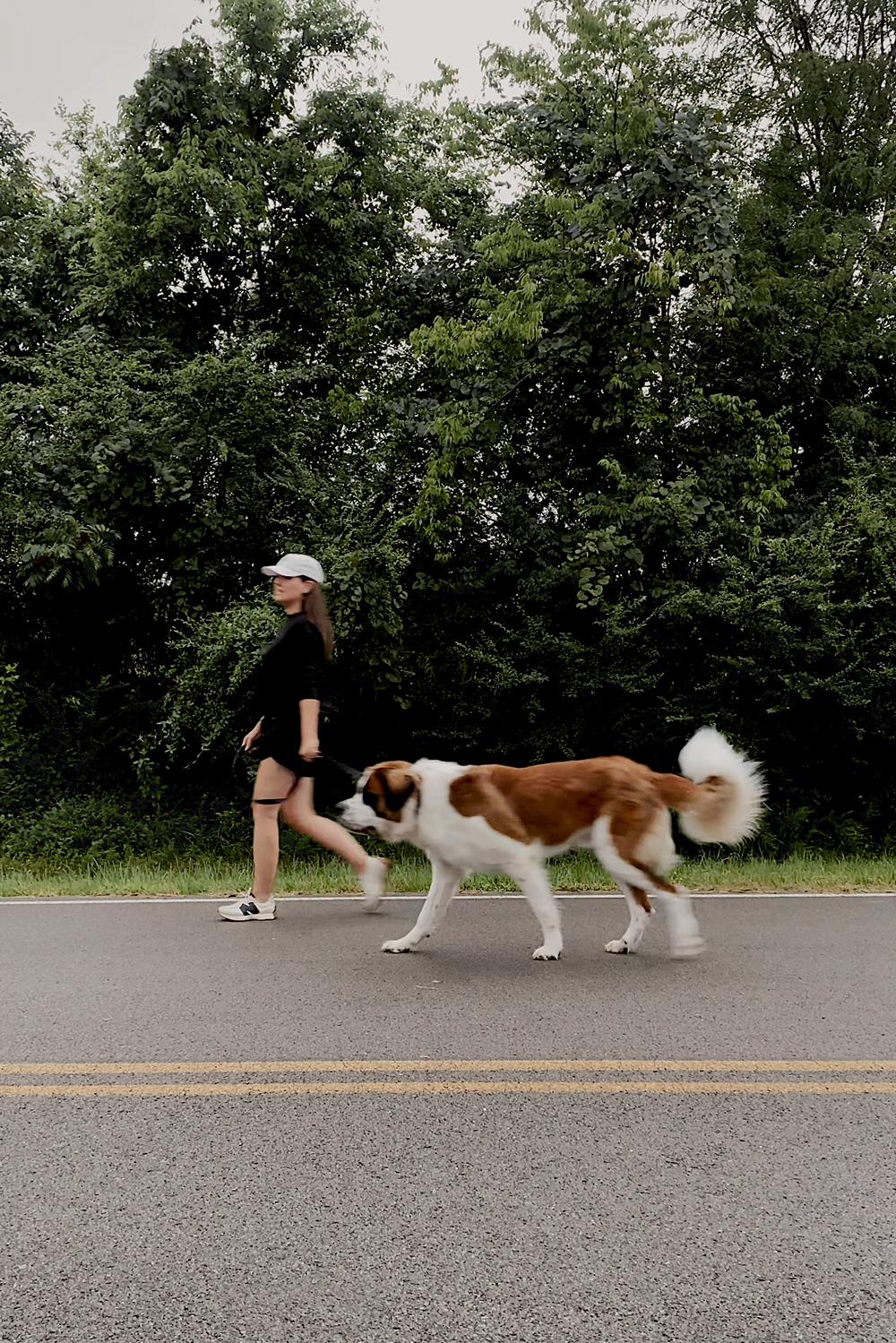
Perhaps the least exciting thing I’ve learned about wellness is what I mentioned earlier – that most of what makes me feel good is incredibly boring. There’s no dramatic reveal here. I sleep better when I stop pretending I can function on five hours of sleep. Moving my body and spending time outside consistently improves my mental health. I feel better when I eat nourishing food most of the time, drink enough water, and experience the world without my laptop in my face sometimes.
I mean, there’s no recurring revenue in “go for a walk”, you know? But there is recurring revenue in convincing you that the walk would be far more beneficial if you were wearing the weighted vest, tracking it with the right device, listening to the right nervous-system-regulating app, and drinking a $4 packet of electrolytes afterward.
Some of it will be valuable. Some of it will be total nonsense. And that is something we need to keep in mind. Wellness is deeply personal. A practice can change someone’s life without needing to become part of mine.
Don’t Get Me Wrong – I Still Try Things.
None of this means I’ve sworn off wellness trends and decided that if our ancestors survived without red light therapy, electrolytes and a sleep score, I can too. Our ancestors also died at 38. I’m willing to hear modern medicine out.
I still experiment. I still get curious. I still buy things. I still change my mind. There are practices I’ve discovered through the very wellness world I’m critiquing that have become meaningful parts of my life.
That’s why I don’t think the answer is rejecting all of it. The answer, for me? It’s discernment. I want to be curious without being easily convinced. Interested in feeling better without constantly searching for evidence that something is wrong.
And maybe most importantly, I want to leave room for the fact that my needs will change. What serves me in one season might not serve me in another. What my body needs right now at 42 may be different from what it needed at 32 and different again from what it will need at 62.
Wellness doesn’t have to be a rigid identity. It can simply be a relationship with yourself that you’re willing to keep paying attention to and evolve with over time.
Bottom Line Is That Wellness Should Give Something Back.
Through it all, does the way I’m caring for myself give something back to my life? Does it give me more energy, more strength, more peace, more confidence, more capacity, more years? Hopefully. Does it give me more ability to be present for the people and experiences that matter to me? Because I don’t think the goal is to become the most optimized version of myself. Because to be honest, I’m not entirely sure that woman would be very fun at dinner anyway.
I think the goal is to feel well enough that I’m able to participate fully in my own life. To take care of my body without making it the center of my existence. To pay attention without obsessing. To make thoughtful choices without requiring perfection from myself. To recognize that sometimes the best thing I can do for my health is add something. And sometimes it’s deciding I don’t need one more thing to manage.
There will always be another wellness trend. There will always be another study, another protocol, another product promising better sleep, better skin, better hormones, better energy, better aging, better everything.
And yeah, I’ll probably try some of them. And there will be some that I roll my eyes at others. *Ahem… snail mucin*
And every once in a while, I’ll discover something wonderful that earns a permanent place in my life. But I no longer assume that because something might make my life slightly better, it automatically deserves a place in it.
Because a well-designed life isn’t built by collecting every good thing available to us. It’s built by becoming selective enough to choose the ones that actually belong. And perhaps wellness isn’t about doing everything possible to perfect the experience of being alive.
Perhaps it’s about taking good enough care of yourself that you can stop thinking about it for a while and actually go live.
_____
P.S. I would love to hear a wellness practice that’s actually earned a permanent place in your life.
Leave a Reply



WEEKLY EDIT
COMMENTS +
Share: